About the Temple
A sacred sanctuary of Lord Damodar on the banks of the Kushawati
The Divine Presence
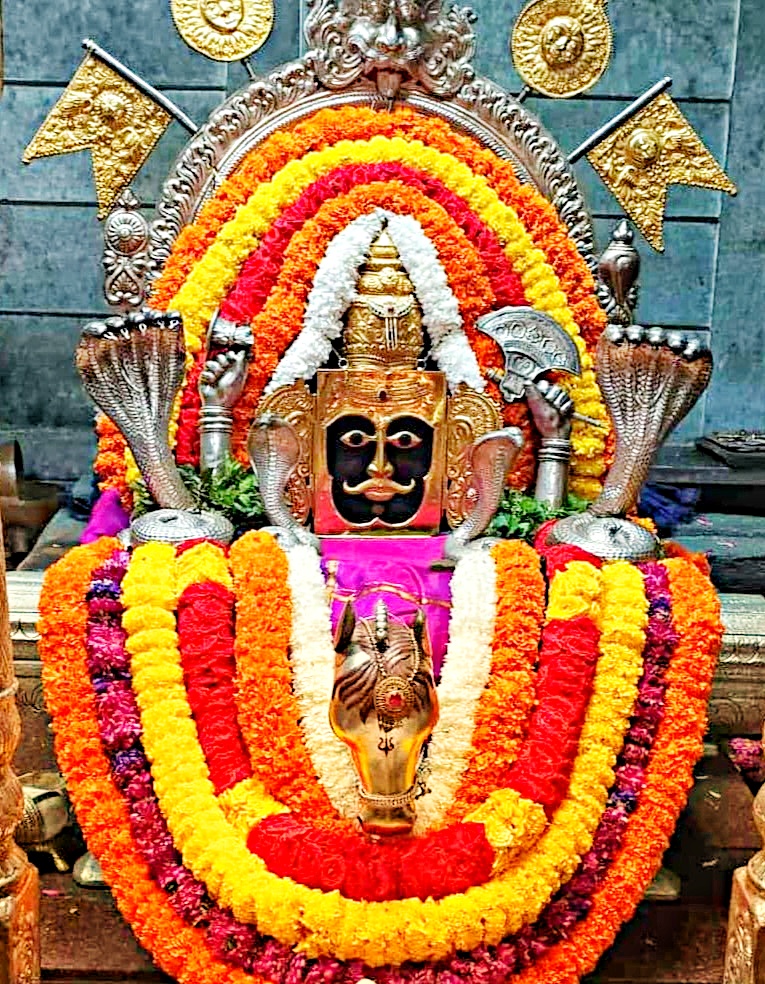
The name "Damodar" derives from Sanskrit — dama (rope) and udara (belly) — a name traditionally associated with the child Krishna. Yet here, Damodar is worshipped as a form of Lord Shiva, embodying a distinctive Goan tradition where Shaivite and Vaishnavite devotion converge.
The sanctum houses both a Shiva Linga and Lakshmi Narayana side by side. Devotees venerate both as a single, unified divine presence — a theological syncretism that scholars regard as uniquely characteristic of Saraswat Brahmin worship in Goa. During festivals like Shigmo, the deity is carried in a palanquin through clouds of pink gulal, creating one of Goa's most spectacular devotional processions.
Sacred Architecture
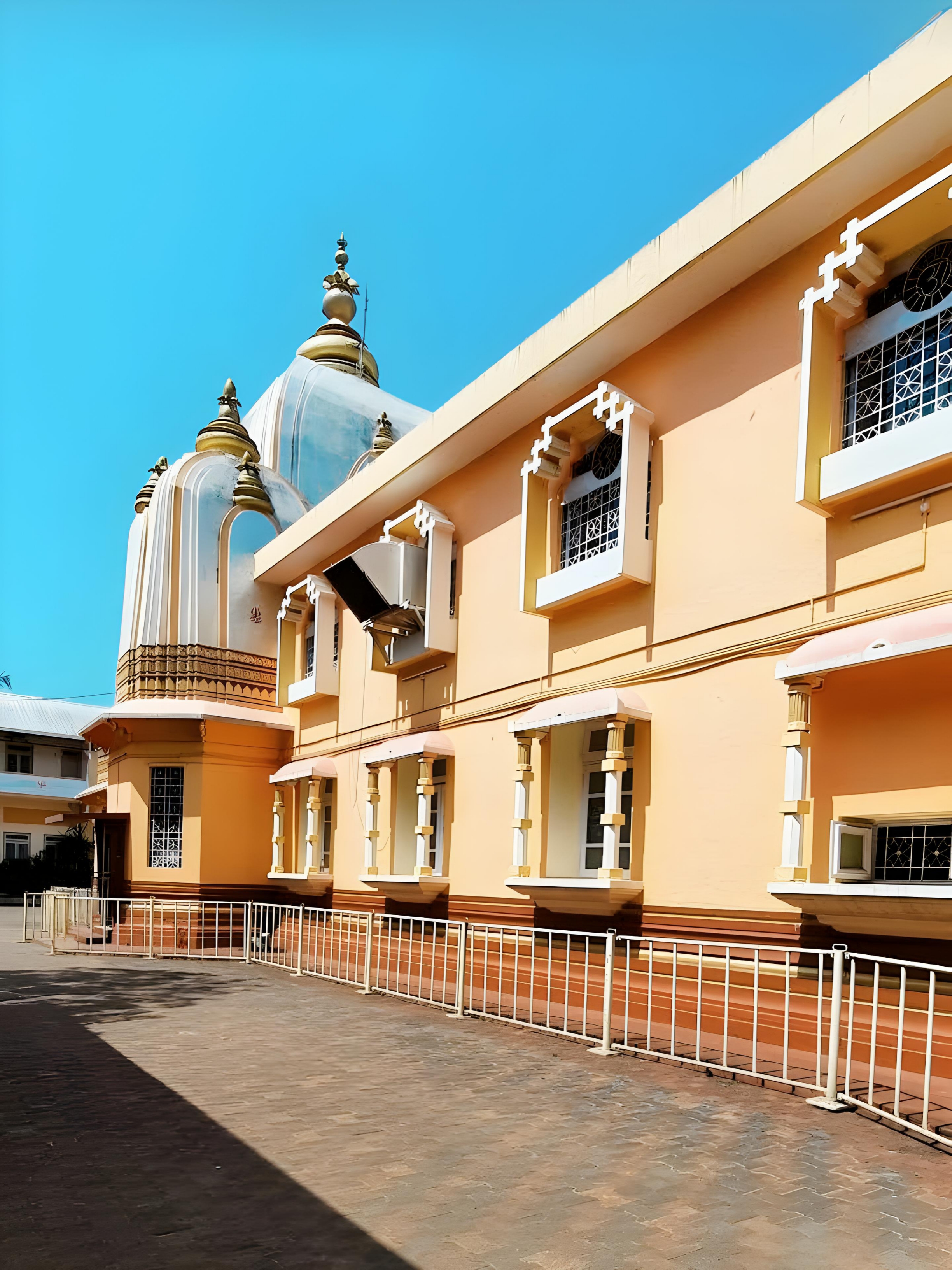
The temple blends Goan vernacular, Indo-Portuguese, Kadamba, and North Indian Nagara styles into a structure unlike any single architectural tradition.
- Copper-plated Shikhara — A North Indian Nagara-style tower over the sanctum, rare for Goa. Added during the 1892–1908 renovation.
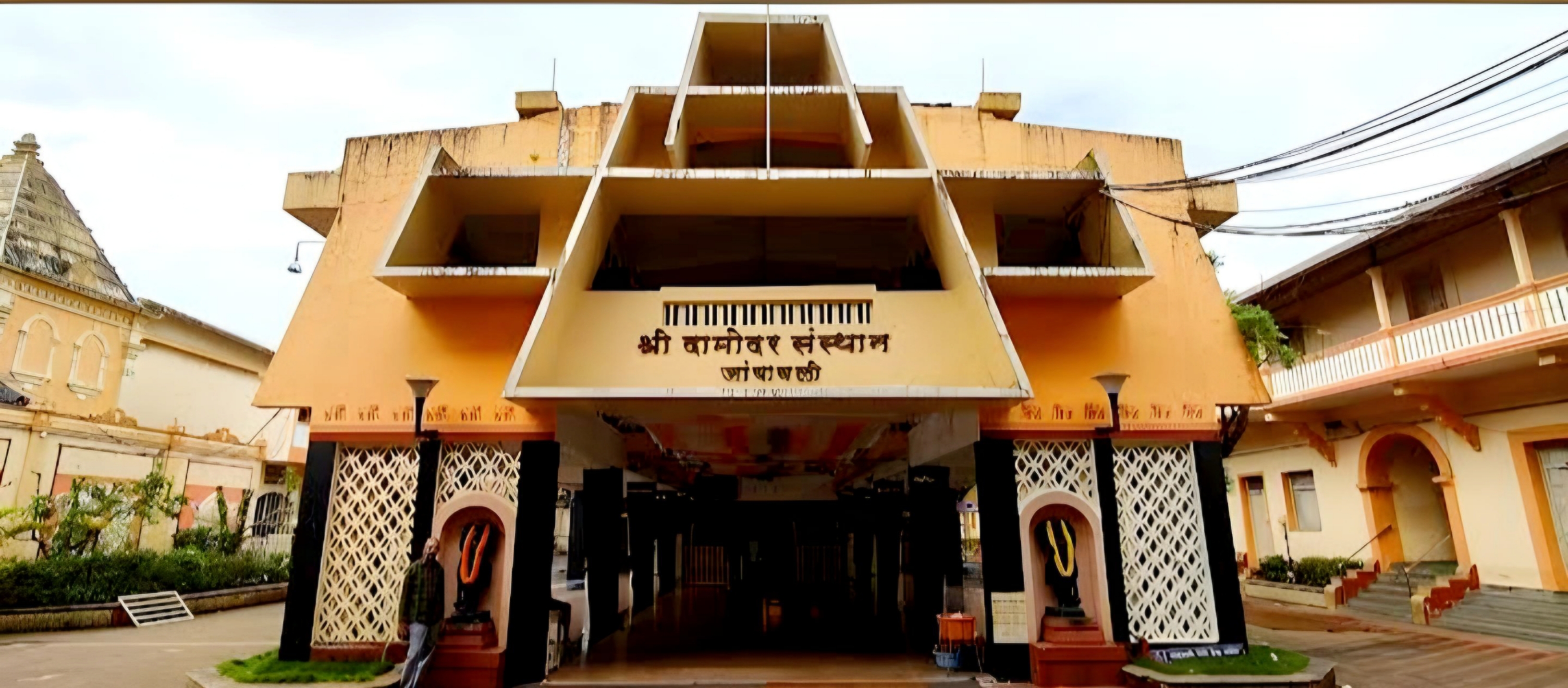
- Triple-arched Gateway — Grand entrance surmounted by the Naubat Khana (drum house) for ceremonial music.
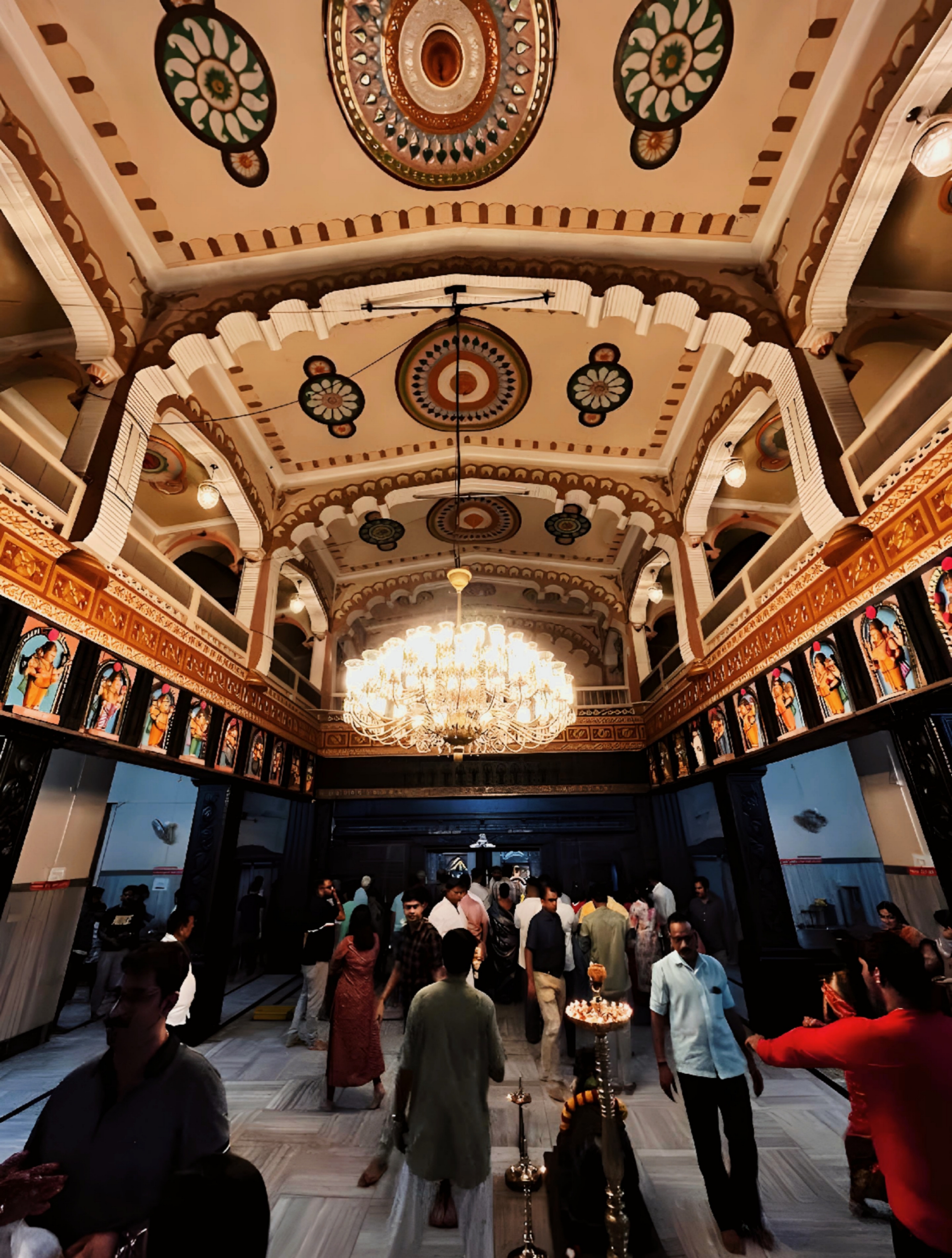
- Sabha Mandap — Assembly hall with carved laterite pillars, Mahabharata scenes, and Bhagavad Gita inscriptions.
- Deepa Stambha — Tall ceremonial lamp pillar illuminated during festivals.
- Materials — Laterite stone, basalt columns, teak ceilings, and clay tile roofing, all locally sourced.
The Sacred Kushawati & Community
The Kushawati River
The Kushawati flows past the temple precinct and is considered a living embodiment of divine grace. Local tradition ascribes healing and purifying powers to its waters. A sacred bathing ghat, roughly 200 metres from the temple, is where pilgrims perform ritual ablutions (snana) before approaching the deity for darshan.
Temple Community
The Prabhudesai family serves as hereditary mahajans (administrators), while the Gokarna Partagali Jeevottam Math provides spiritual guidance. The Mathagramastha Hindu Sabha, comprising sixteen founding families, organizes the annual Gulalotsav and other major festivals that sustain the temple's vibrant devotional life.